
Bullitt County Public Schools (BCPS) built a clear, replicable path from instructional resource evaluation and selection to vibrant learning. The district followed Kentucky Department of Education (KDE) curriculum framework recommendations and grounded every step in the BCPS Instructional Vision.
Implementation and Professional Learning
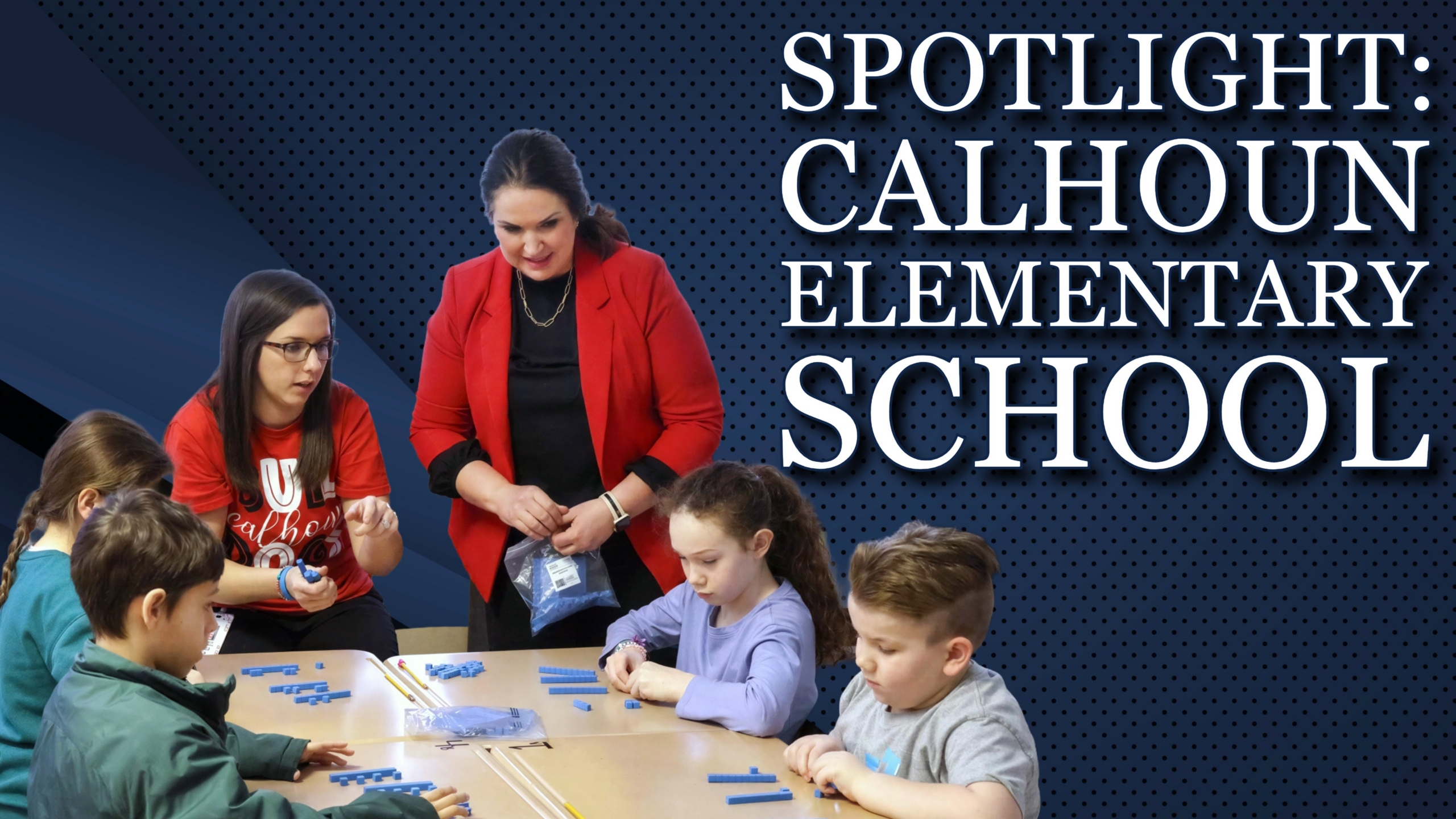
Once the high-quality instructional resource (HQIR) for mathematics was adopted, implementation began with pilot schools so the rollout plan could be shaped by classroom reality. The HQIR publisher recorded summer introductory videos for principals, giving leaders context before the July training. Teachers received comprehensive curriculum-based professional learning (CBPL) in July and ongoing professional learning during Bullitt Days and Professional Learning Communities (PLCs). Instructional coaches modeled lessons from the HQIR, co-taught and facilitated discussions. To sustain the work, the district adopted a train-the-trainer approach so instructional coaches could lead Bullitt Day learning whenever the CBPL provider was not present—building internal capacity and consistent support.
The district’s professional learning plan (HQPL) was designed as multi-year and multi-layered to meet different levels of pedagogy and comfort with HQIRs. The sequence included a launch, a follow-up within two months (large-group or PLC-based, guided by teacher feedback), and additional PLC-based sessions in the spring. Each teacher had a minimum of three touchpoints with the professional learning partner. Launch sessions were organized into affinity groups by grade (K–5) and by content area (6–8), with a focus on understanding purpose, flow, and available resources. Another layer supported school leadership through sessions that built understanding and a supportive lens for building leaders. All touchpoints were anchored in teacher sentiment and feedback.
Systems and Structures for Vibrant Learning
From there, Bullitt County installed systems and structures to make vibrant learning experiences doable at scale. The district developed a custom HQIR AI coach to provide always-on coaching. As Chief Academic Officer Brandy Howard explained, “This innovative chatbot provides 24/7 coaching, ensuring that lessons remain connected to [the HQIR and] our core instructional priorities.” The team also implemented Inkwire as a centralized place to house student learning artifacts, demonstrating more engaging and vibrant learning experiences aligned to the district’s vision for high-quality mathematics instruction.
Feedback and Morale
Stakeholder feedback now runs on a fixed cadence. The district will administer teacher surveys from the HQIR toolkit and collect principal and coach input from ongoing observations. Each Wednesday, the central office student learning leadership team conducts walkthroughs to monitor progress, identify trends and gather real-time classroom insights. “We are committed to maintaining a continuous feedback loop with all stakeholders throughout implementation,” Howard said. This routine helps the district celebrate wins, address challenges quickly and make sure voices from every role shape the next round of support.
Culture and morale are treated as part of the implementation plan. The district named the challenge up front: HQIRs mean new pacing and a reevaluation of classroom practices. Support was built on the diverse skills and knowledge of staff, while adoption was guided by teacher feedback. “Implementing High-Quality Instructional Resources can be challenging for everyone involved. It is essential for our teachers, staff and administrators to maintain a growth mindset throughout this process,” Howard said. PLCs are positioned as the day-to-day engine for that support, giving teams a place to plan, try, reflect and adjust together.
Early Impacts
Early teacher impacts are positive. Teachers value having high-quality, well-structured materials that bring clarity and consistency across classrooms while leaving room for creativity and differentiation. New teachers feel supported because lessons are aligned with best practices. Initial uncertainty is giving way to confidence as staff experience the clarity, structure and quality of the materials; time shifts from searching for resources to focusing on instructional delivery and student engagement. “Although we are still early in implementation, teachers have responded positively to having access to high-quality, well-structured materials,” Howard said. Teachers also report relief and appreciation for ready-to-use mathematics materials aligned to the district’s instructional vision, noting that professional learning and coaching structures make it clear they’re not doing this work alone.
Student signals are emerging. Implementation began in August, so outcomes are still developing, but students are responding to coherent lessons and feel appropriately challenged. The clear structure helps them understand expectations and teachers report more engagement with challenging mathematical tasks—a promising early move toward deeper learning. It is too early to draw conclusions about student outcome data, but the district expects that increased access to grade-level mathematics and improved student engagement will translate to progress as the year unfolds.
Closing
With coherent systems and structures in place, Bullitt County has furthered vibrant learning for students through the implementation of a quality math resource aligned to their instructional vision. Teachers feel supported. Students are challenged. The work gets stronger each week—and it’s a model any district can adapt.
Have a spotlight to share? Reach out to OTL Communications and Digital Marketing Consultant Michael Carr at Michael.Carr@education.ky.gov.