
An initial professional learning day set the stage for a bigger shift. At Highlands Middle School in Fort Thomas Independent Schools, a session on assessment alignment introduced the sixth-grade science team to storyline instruction. The idea clicked. The team started exploring OpenSciEd, a high-quality instructional resource (HQIR) designed around coherent scientific phenomena that build knowledge through investigation and talk.
Science Department Chair Mrs. Kimberley Klein shared that the interest turned into a plan. With support from the Northern Kentucky Cooperative for Educational Services (NKCES) and coach Hallie Booth, the teachers spent a week in summer PD digging into what effective science instruction should look like. “We wanted to move away from the traditional ‘copy-and-paste’ style of learning and encourage students to think critically,” Klein said.
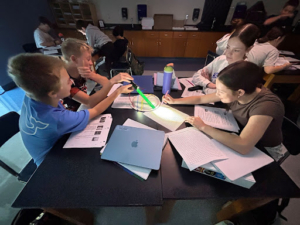 To make the work doable, the school upgraded core lab supplies. Outdated tools, like old triple-beam balances, were exchanged for reliable equipment so investigations would run smoothly. The department set a tight collaboration rhythm: twice-weekly PLCs for science and twice-weekly grade-level meetings. Classrooms also opened for site visits so other schools could see the lessons in action.
When additional needs surfaced from PLCs or classroom observations, Principal Erika Volphenhein moved quickly to remove barriers. In the absence of the logistical and instructional barriers, Klein noted teachers could better focus on the needs of students. “Once you know better, you do better,” Klein said. That mindset kept momentum high.
The teachers experienced change first. Confidence rose as the team learned to lead effective discussions, develop and refine student-generated models, and keep lessons student-centered. The open-door culture built pride and accountability in the work. Teachers felt seen, heard and valued. Support stayed practical with ongoing training through NKCES, clear communication with the principal and regular time to plan, try and reflect.
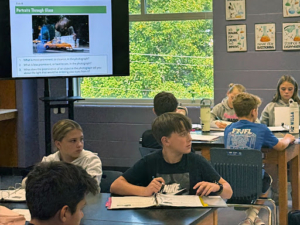 The student experience changed as well. The focus on inquiry promoted active participation in classrooms. Students generated their own questions, built models, tested ideas and revised explanations with new evidence. Writing shifted too. “Students are learning that scientific writing is different from writing in language arts,” Klein wrote. Collaboration also became a norm: “Students are learning that they have to work together in order to complete a task, and having more ideas together allows for them to critically think about a problem that they have to solve.”
 Teachers further reported clear gains in engagement and classroom climate. “I am directly observing students demonstrating grit and taking ownership of their learning,” Klein said. “As a by-product I see increased engagement and participation and fewer behavior issues.” According to Klein, by midyear, teachers saw “deeper, more open questions”, more independence as “students read directions and try before asking”, and healthier attitudes toward error with “wrong answers” viewed as part of learning. Models also improved over time as students added evidence and revised.
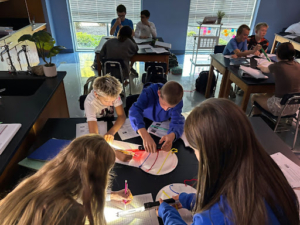 The shift supported increased access to grade-level learning for all students as well. “We have made great strides in serving our special needs population,” Klein noted. Resources for special education teachers improved, and the department’s common routines (discussion, modeling, structured collaboration) helped more students participate. The team also aligned assessments with inquiry, so growth showed up in talk, models and writing, not just recall.
Klein summarized the culture that made it possible: open communication, shared ownership, and quick responses when teachers named what they needed. The HQIR provided the throughline; the people and the systems made it real.
For more information on HQIRs and implementation guidance, please visit the high-quality instructional resources page on kystandards.org.
Have a spotlight to share? Reach out to Communications and Digital Marketing Consultant Michael Carr at Michael.Carr@education.ky.gov.
KDE staff used generative AI tools to assist with drafting and editing this article. All facts, quotes, and final wording were reviewed and approved by the KDE.