
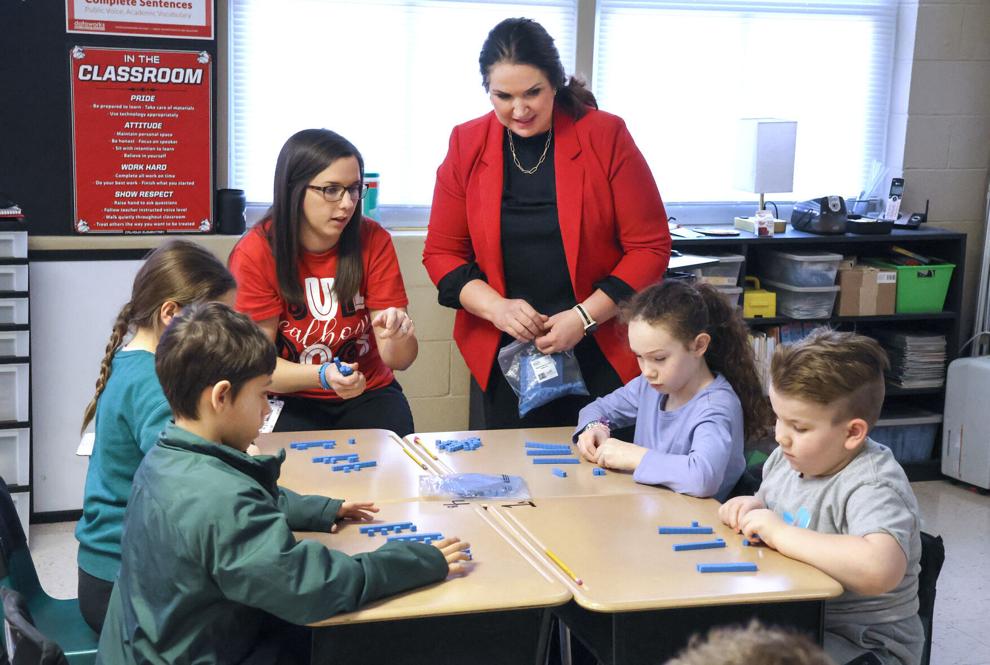
Calhoun Elementary School set out to strengthen Tier I mathematics instruction by aligning classroom practice more closely with the intent of the Kentucky Academic Standards for Mathematics and fostering productive struggle among students. In pursuit of this goal, school leaders selected Illustrative Mathematics, a high-quality instructional resource (HQIR) that received strong ratings across all gateway areas on EdReports. The curriculum was chosen not only for its alignment to standards, but also for its emphasis on clear learning goals, meaningful student discourse, and the development of math fluency.
Supporting Teachers
Recognizing that implementing a new and significantly different curriculum requires sustained support, Calhoun Elementary made intentional investments in teacher learning and preparation. Certified trainers provided initial professional learning prior to the start of the school year, ensuring teachers began implementation with a shared understanding of the curriculum’s structure and expectations. Throughout the year, the school continued this support by providing substitute coverage so teachers could collaborate and map out upcoming instructional units. In addition, leadership supplied hard copies of materials, online slide decks, and student workbooks. By reducing the planning workload, these resources allowed teachers to focus more fully on preparing for and delivering high-quality instruction. Support extended to new hires as well, with the school purchasing online training modules and allocating time for peer collaboration to ensure coherence in the student experience.
Monitoring and Adjusting
As implementation progressed, school leaders closely monitored instructional practices and made adjustments based on multiple sources of data. Annotated lesson plans, classroom walkthroughs, and coaching conversations provided insight into how the curriculum was being implemented. Administrators also relied on fluency trackers, universal screeners, and lesson cool-downs to gauge effectiveness. Early data revealed a need for instructional shifts, particularly in increasing opportunities for authentic student discourse and productive struggle, as teachers were initially doing much of the talking. In response, leadership used each data point to refine support and guide instructional adjustments, reinforcing the expectation that students actively engage in explaining their thinking.
Building Fluency
To further strengthen math fluency, Calhoun Elementary deepened its professional learning structures. The school placed a teacher representative from each grade level in the Kentucky Numeracy Counts Academy, creating a network of shared expertise. Teachers collaboratively mapped specific fluency games within each HQIR unit pacing guide to ensure consistency and intentional practice. Mid-year work sessions provided additional opportunities for cross-grade collaboration, allowing teachers to analyze trends and address common weaknesses identified through fluency assessments. Looking beyond the classroom, the school is also developing “At Home Math Fluency Kits,” which include games and strategies for families. These kits help families better understand the mathematical thinking students are expected to use when working at home.
Conclusion
These coordinated efforts led to measurable improvement in mathematics proficiency at Calhoun Elementary. More importantly, the school shifted expectations from completing a high quantity of problems to emphasizing high-quality mathematical representation and reasoning. Students now approach math with a deeper desire to understand and explain their thinking. Calhoun Elementary’s experience illustrates how intentional, data-driven professional learning—combined with strong instructional resources and sustained teacher support—can meaningfully improve the student learning experience and build a culture where students confidently engage in their growth as mathematicians.